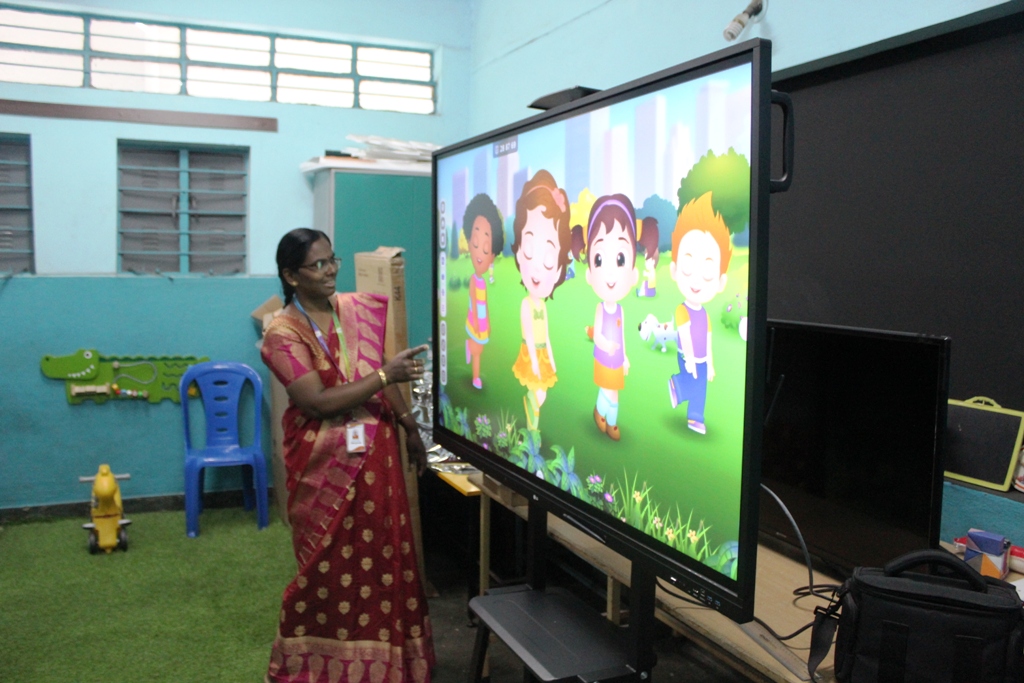
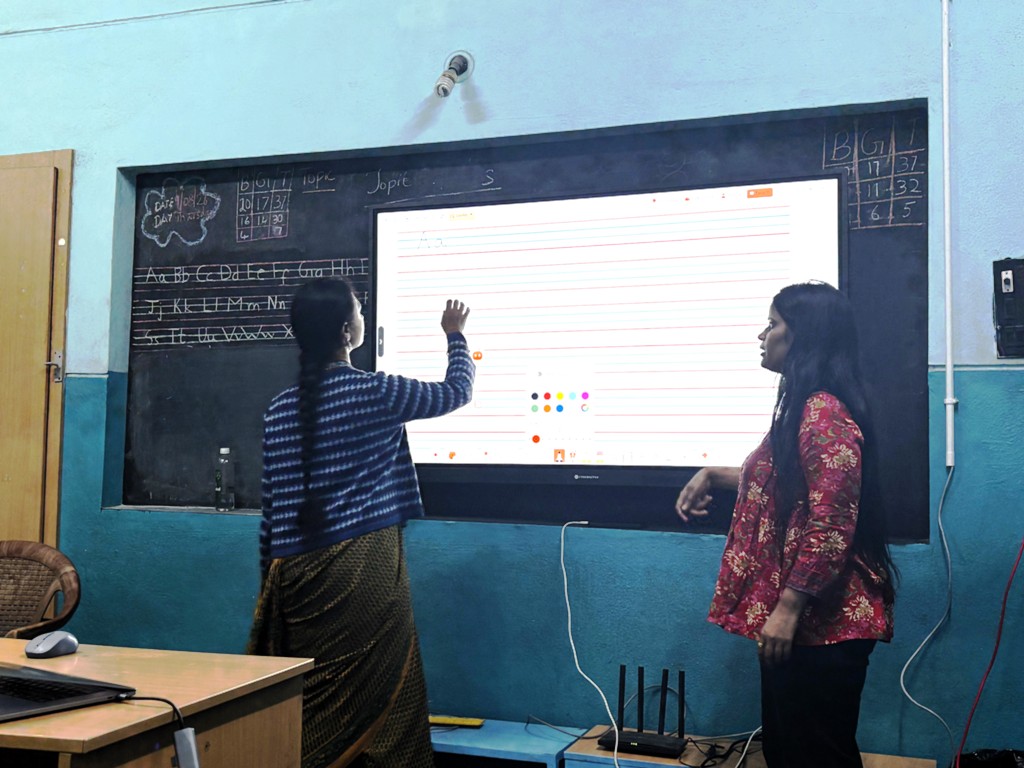
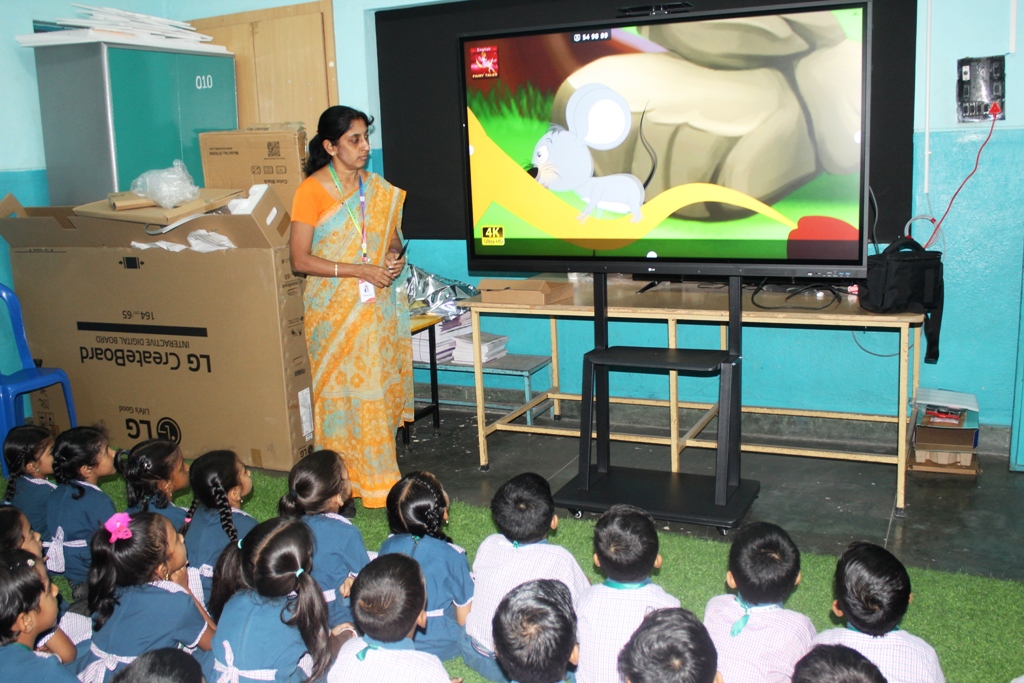
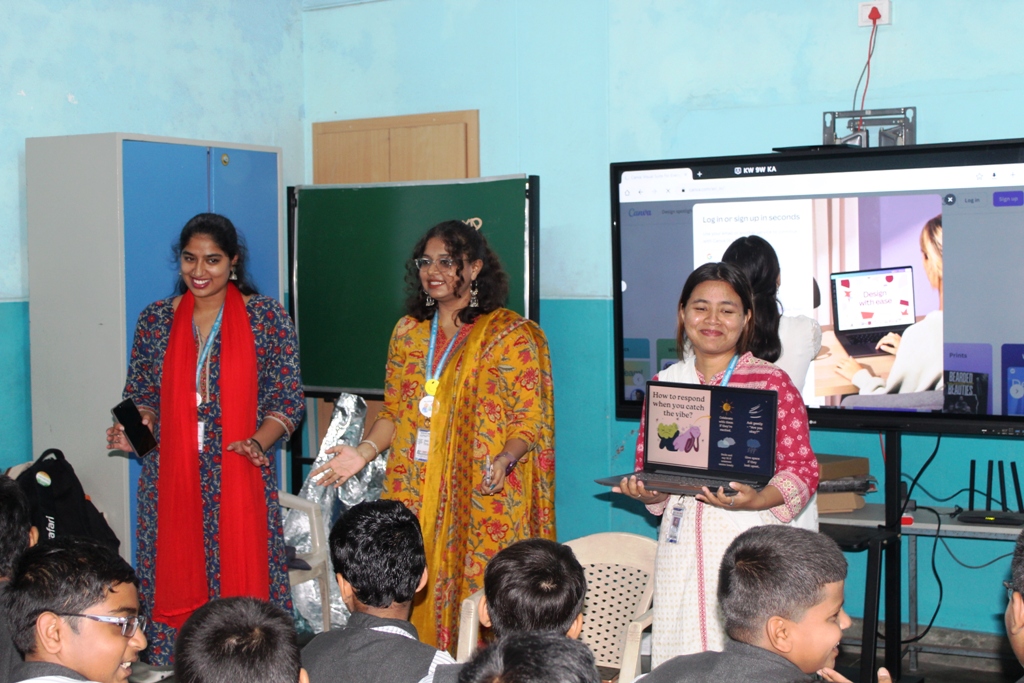
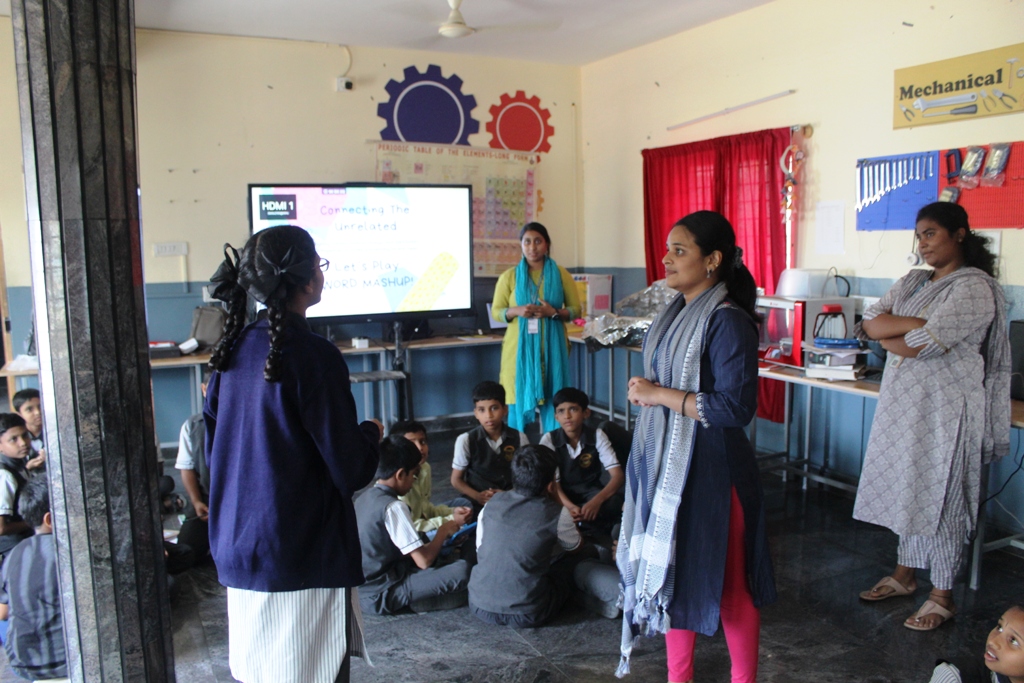
Multi-Sensory (VAK) Learning Integration:
Traditional teaching often leaves out
kinetic or visual learners. Interactive
boards seamlessly merge Visual media
(videos, animations), Auditory elements
(sound effects, music), and Kinesthetic
touch (dragging, dropping, drawing),
maximizing information retention.
Gamified Classroom Dynamics:
Abstract problem solving turns into an
engaging arena. Teachers can run live
quizzes, spin probability wheels for math
challenges, or use digital timelines,
shifting students from passive listeners
into active participants.
Real-Time Data Saving & Cloud
Distribution:
Gone are the days of manually copying notes
before the board is erased. Every
annotation, solved formula, or brainstormed
concept map can be saved instantly into a
PDF or cloud file and sent directly to
parents and students.
High-Level Coliborative Coding & Logic:
In technical classes like Robotics, multiple
students can walk up to a single massive
screen to drag block-coding strings
together, debug an error collectively, or
simulate circuits before building them
physically.